
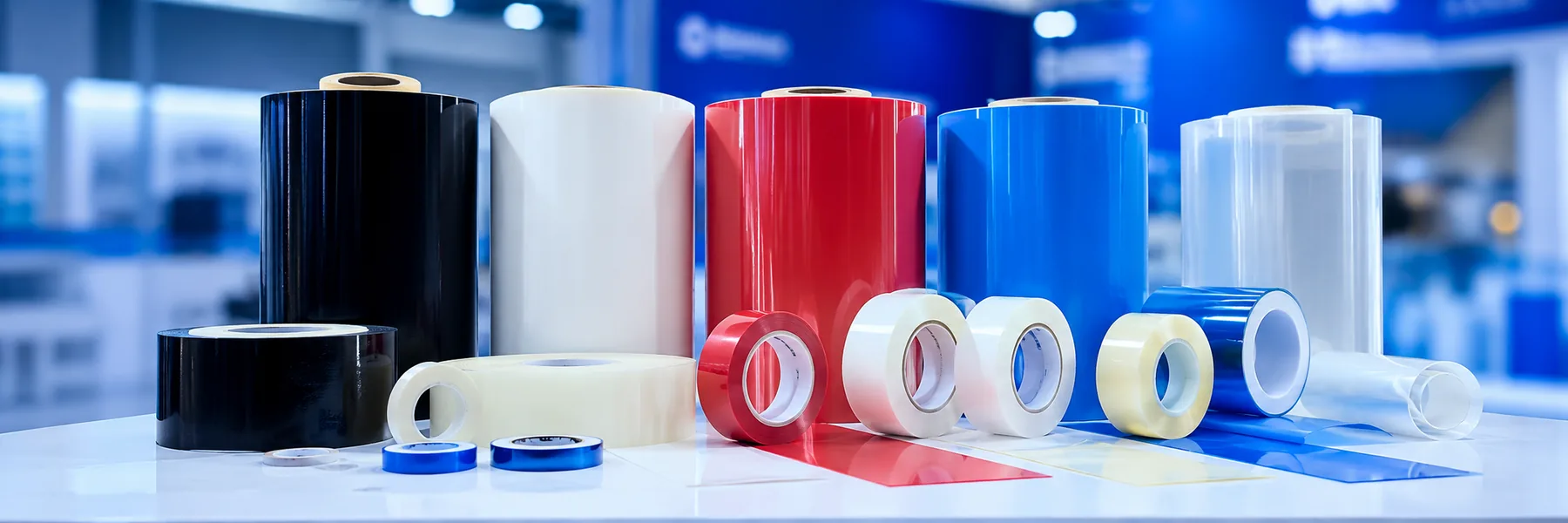
EB Crosslinking for Tapes & Pressure-Sensitive Adhesives
Improved Heat Resistance, Holding Power & Cohesive Strength
Using EBR roll-to-roll systems, controlled EB crosslinking can be applied to industrial tapes, electronic tapes, heat-resistant labels, and hot-melt pressure-sensitive adhesive systems to improve heat resistance, cohesive strength, and reliability under high-temperature conditions.
Pressure-sensitive adhesive tapes often fail not because of insufficient initial tack, but because the adhesive layer can flow, creep, or lose cohesive strength under high temperatures, prolonged loads, or exposure to solvents.
EB crosslinking generates reactive free radicals within the adhesive layer, creating additional crosslinks between polymer chains and improving cohesive strength and holding power at elevated temperatures. For hot-melt pressure-sensitive adhesives, selected acrylic pressure-sensitive adhesives, and industrial adhesive systems, EB can be used as a post-crosslinking process to improve stability under high-temperature conditions.
In EBC sample tests, the EB-treated tape maintained adhesion at 80°C for more than 72 hours, compared with less than 10 minutes for the untreated sample. At 120°C, the EB-treated sample maintained adhesion for 12 hours. Actual performance depends on the adhesive system, coating weight, substrate, dose, and processing conditions.
Based on adhesive-layer thickness, substrate structure, and target performance, EBC can evaluate the dose-depth profile, conduct sample trials and continuous roll-to-roll testing, and help determine the appropriate accelerating voltage, dose, and EBR system configuration.
| Test Condition | Untreated | EB-Treated |
|---|---|---|
| Holding Time at 80°C | < 10 min | > 72 h |
| Holding Time at 120°C | — | 12 h |
Start with a Tape or Adhesive Sample
Share your adhesive-layer structure and target performance. EBC can first evaluate the required dose and conduct sample testing. Once the sample performance is confirmed, we can further evaluate roll-to-roll pilot conditions and the appropriate EBR system configuration.